Inside the Studio
Where raw cloth becomes wearable art. Every garment begins with an idea and ends with a transformation — handcrafted, stitch by stitch, for those who believe clothing should mean something.
In the Studio
Where every garment begins
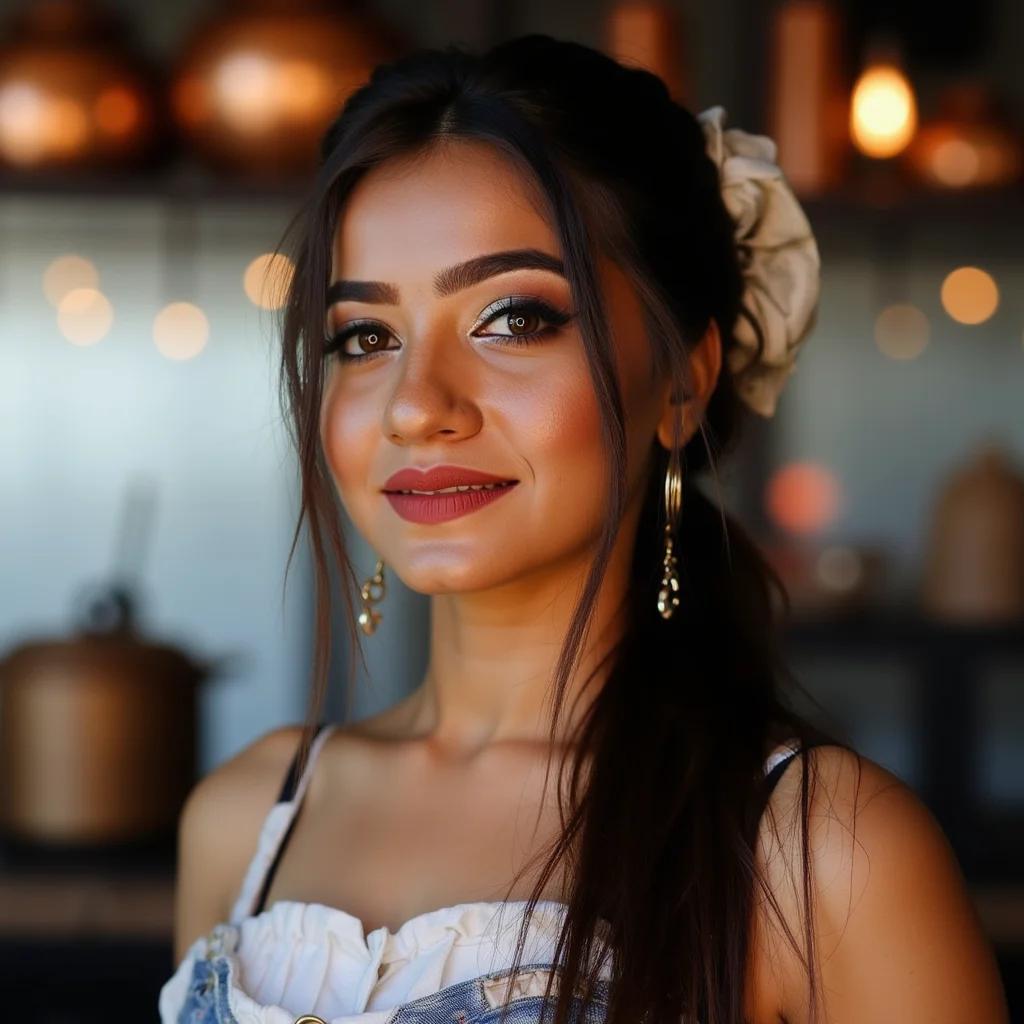
From the first sketch to the final stitch, each piece is made in close collaboration with master karigars — preserving centuries-old techniques while shaping a contemporary voice. Nothing leaves the atelier without passing through the designer's own hands.
The Process
01
Concept & Mood Board
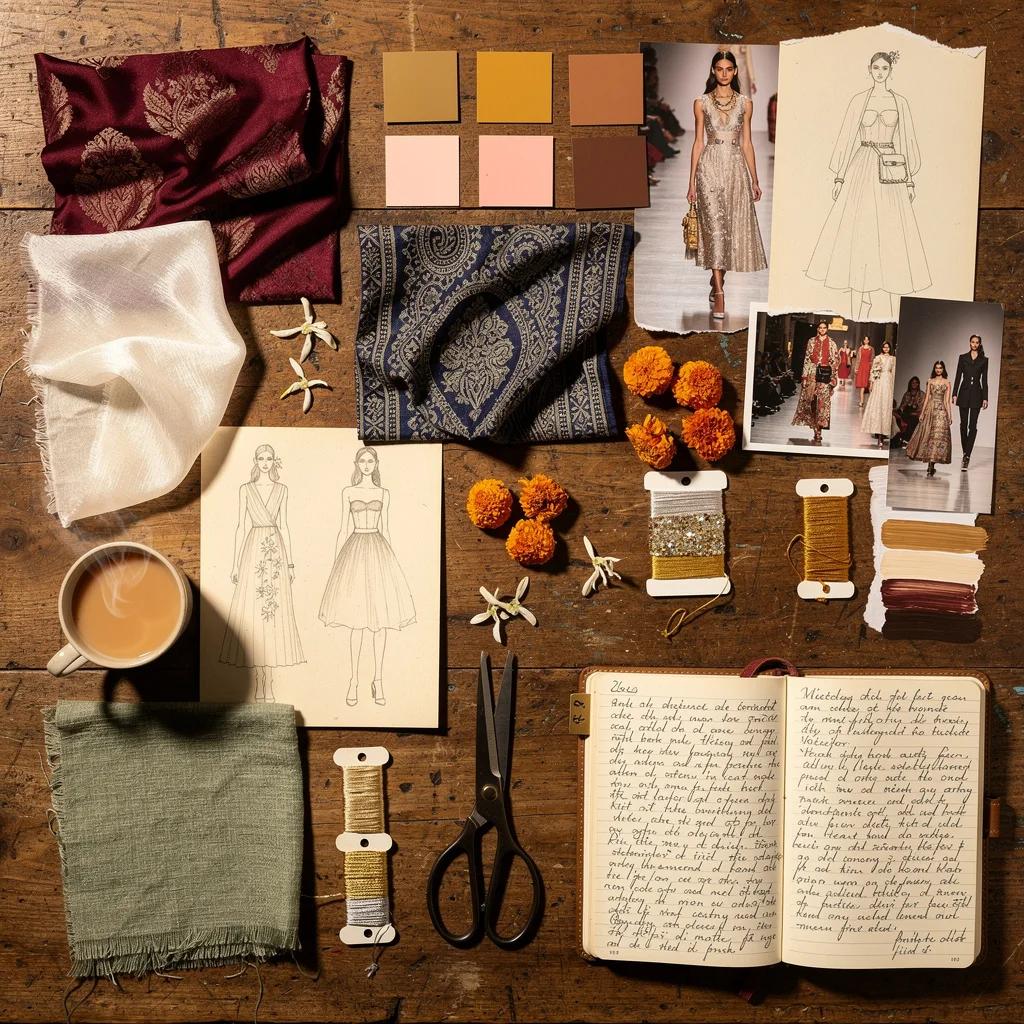
Every collection begins with research — historical textile archives, travel to weaving communities, conversations with master artisans. The concept phase distills months of exploration into a mood board: color palettes, fabric swatches, silhouette sketches, and reference imagery that define the collection's visual language and emotional arc.
02
Fabric Sourcing
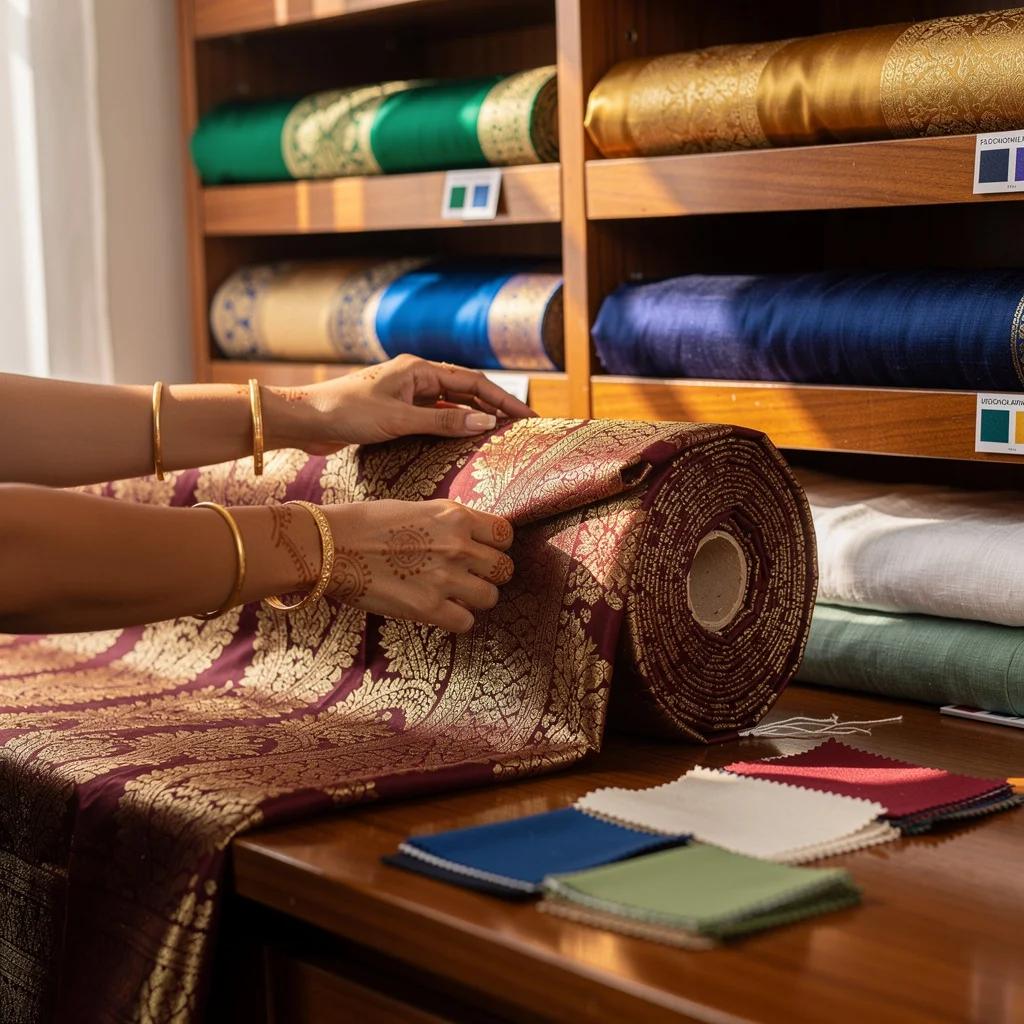
We source directly from artisan communities across India — handloom silk from Varanasi weavers, block-printed cotton from Jaipur's Sanganeri workshops, organic khadi from Gujarat cooperatives. Every fabric is hand-selected for weight, drape, texture, and the story of the hands that made it. Sourcing is not procurement; it's partnership.
03
Pattern Making & Draping
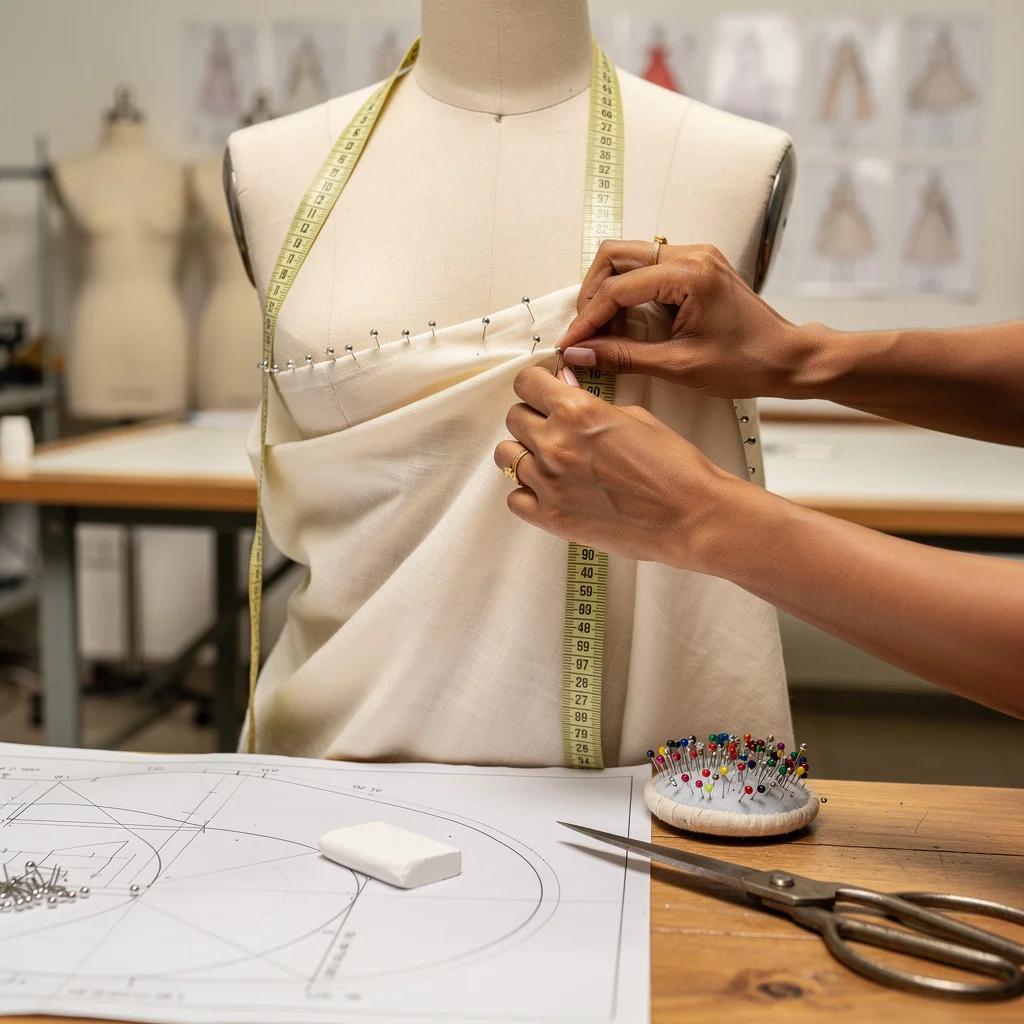
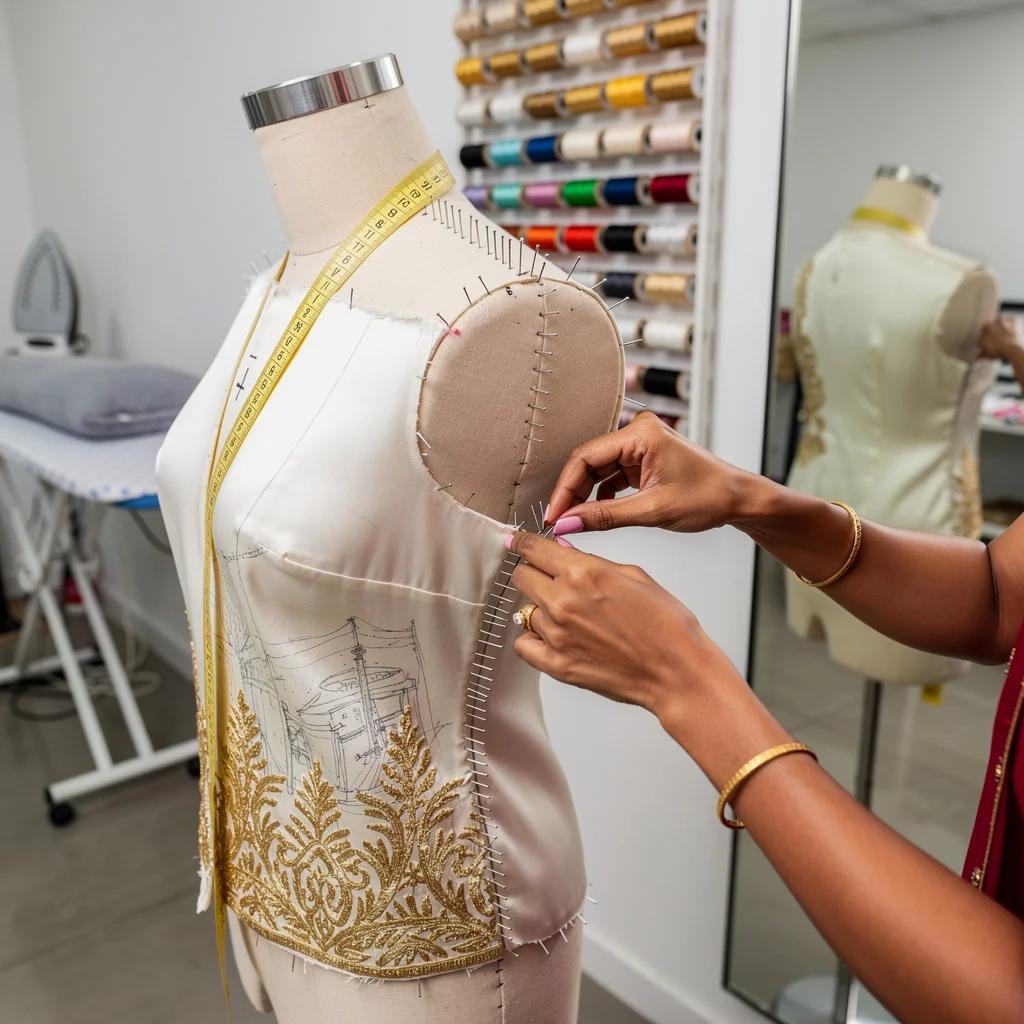
Each silhouette is developed through iterative draping on a dress form, translating two-dimensional sketches into three-dimensional garments. Muslin toiles are cut, pinned, and re-draped until the proportions and movement are exactly right. Pattern pieces are then drafted by hand, preserving the organic quality of the draped form.
04
Embroidery & Embellishment
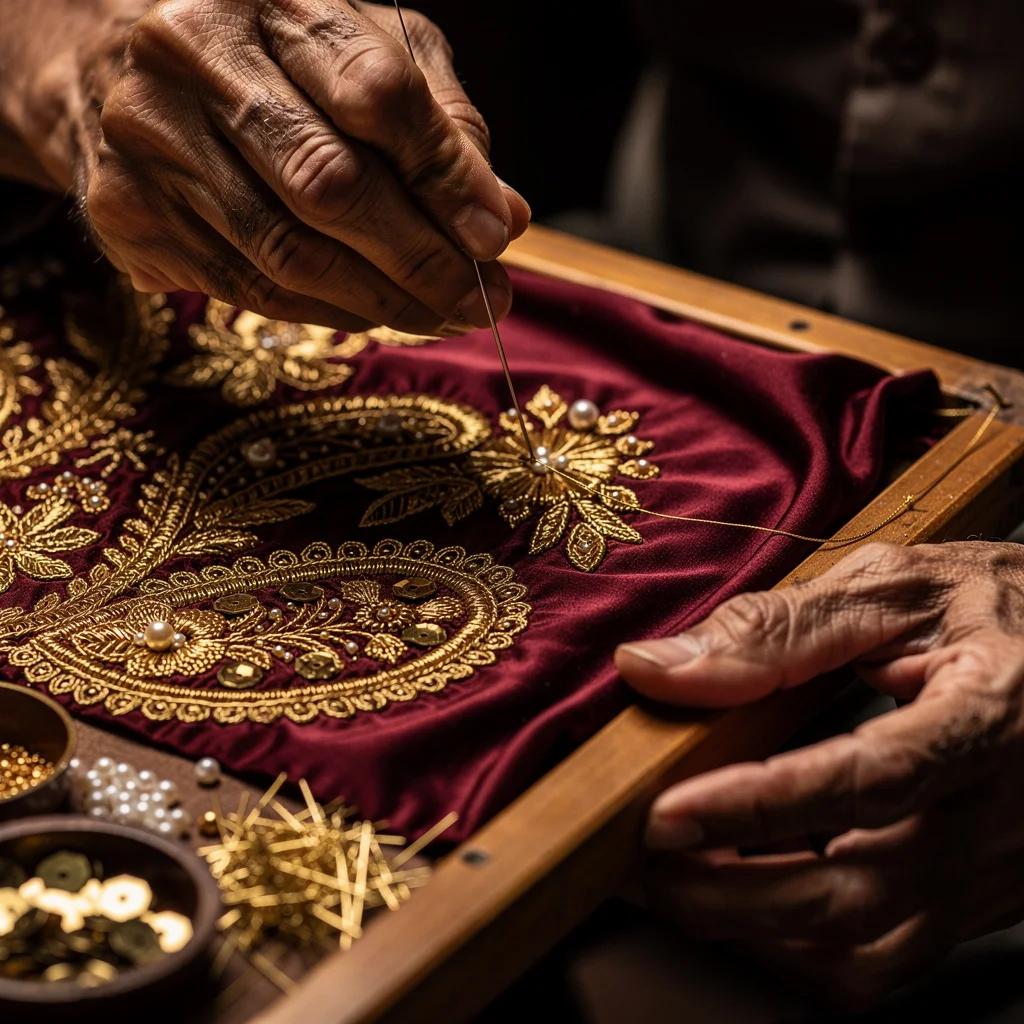
The soul of couture lives in embellishment. Our zardozi karigars in Lucknow work with gold and silver bullion wire, pearls, sequins, and semi-precious stones to create embroidery that can take 200-800 hours per garment. Every bead placement is mapped on a stencil, then executed entirely by hand — the patience of generations compressed into every square inch.
05
Fitting & Construction
Multiple fittings refine each garment from muslin prototype to finished piece. Construction follows couture standards — hand-finished seams, concealed closures, internal boning and structure where needed. Every garment is built for a specific body, with adjustments made at each fitting until the silhouette, drape, and movement meet the design intent.
06
Final Finishing & Styling
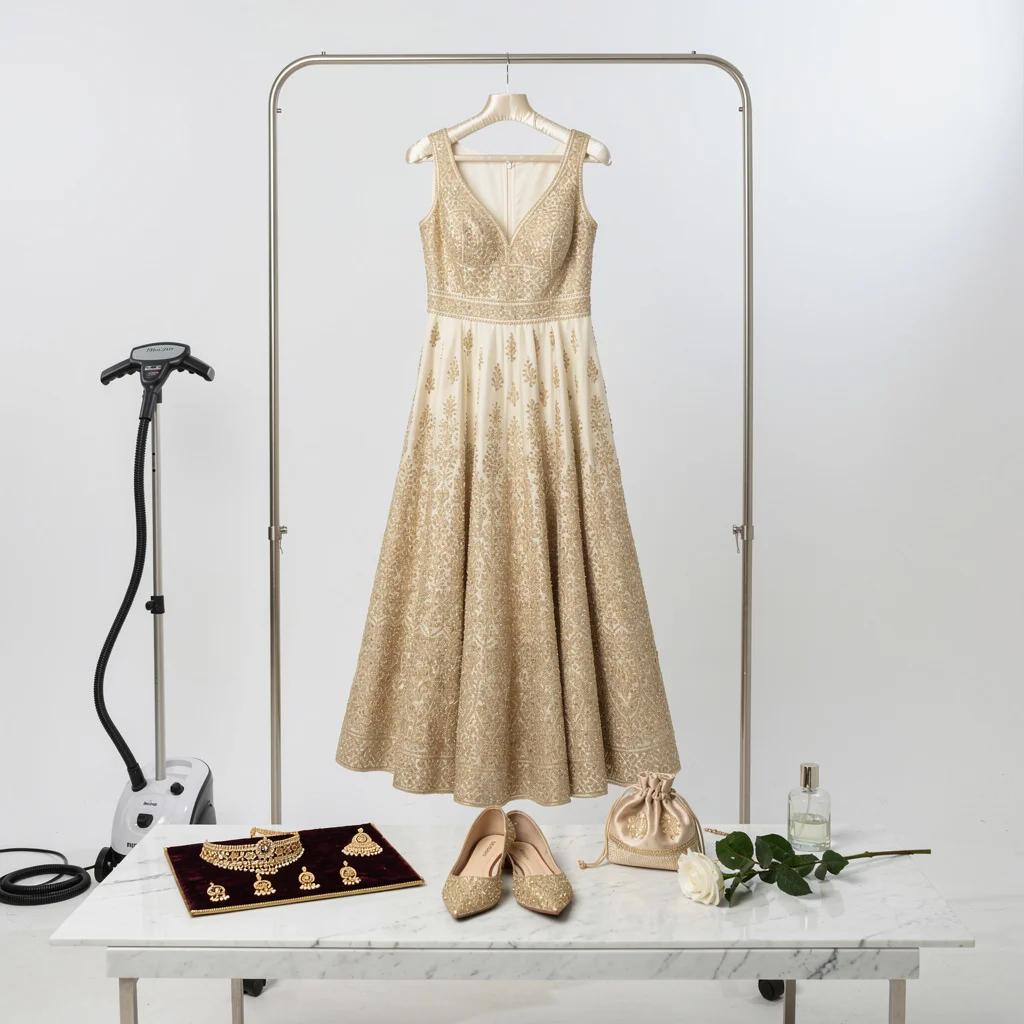
The final stage brings every element together — pressing, steaming, hand-finishing edges, attaching closures, and final quality inspection under studio lighting. Each garment is then styled for its editorial debut: selecting jewelry, draping dupattas, choosing footwear, and art-directing the photoshoot that will introduce the piece to the world.
Signature Materials
Zardozi Embroidery
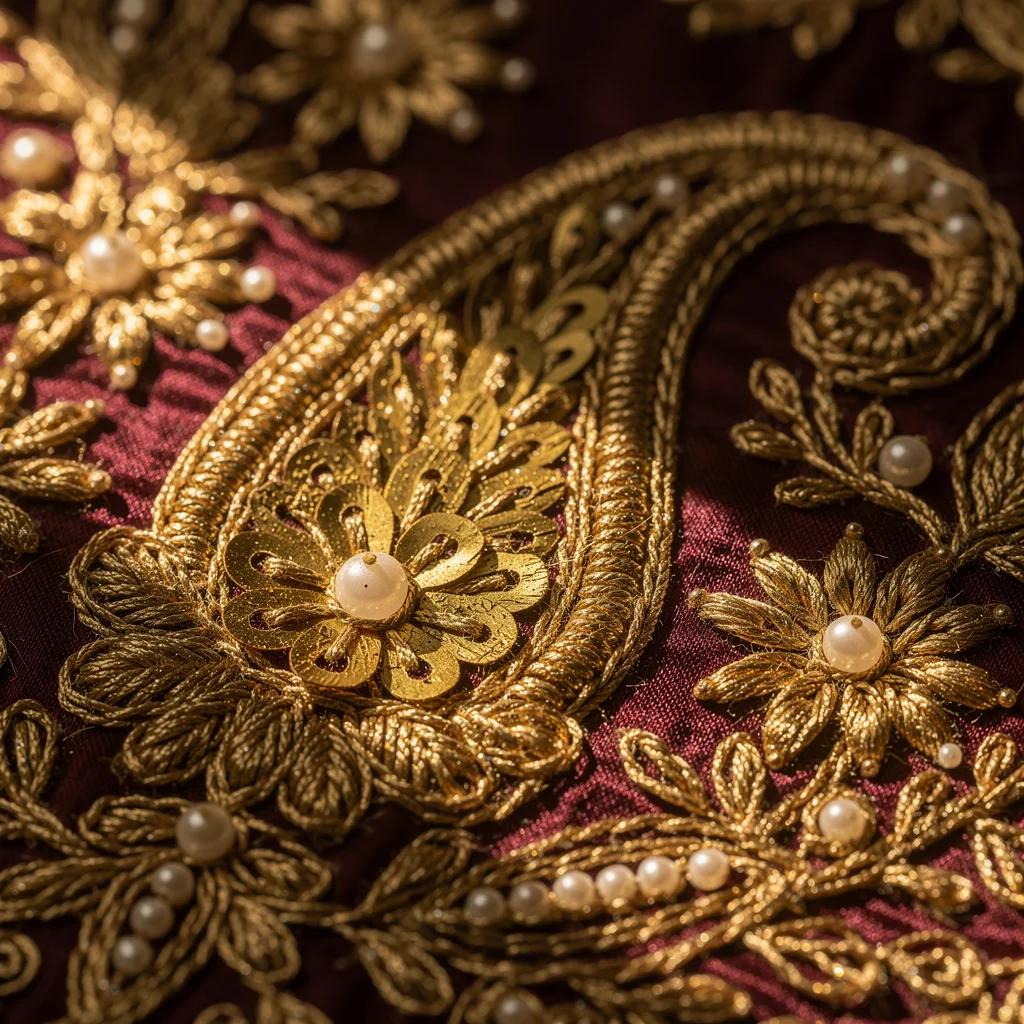
An ancient Mughal court craft dating to the 16th century, zardozi uses gold and silver bullion wire, coiled springs (dabka), sequins, and semi-precious stones hand-stitched onto fabric stretched on a wooden frame (adda). Our karigars in Lucknow maintain techniques passed down through generations. Used extensively in Noor bridal couture.
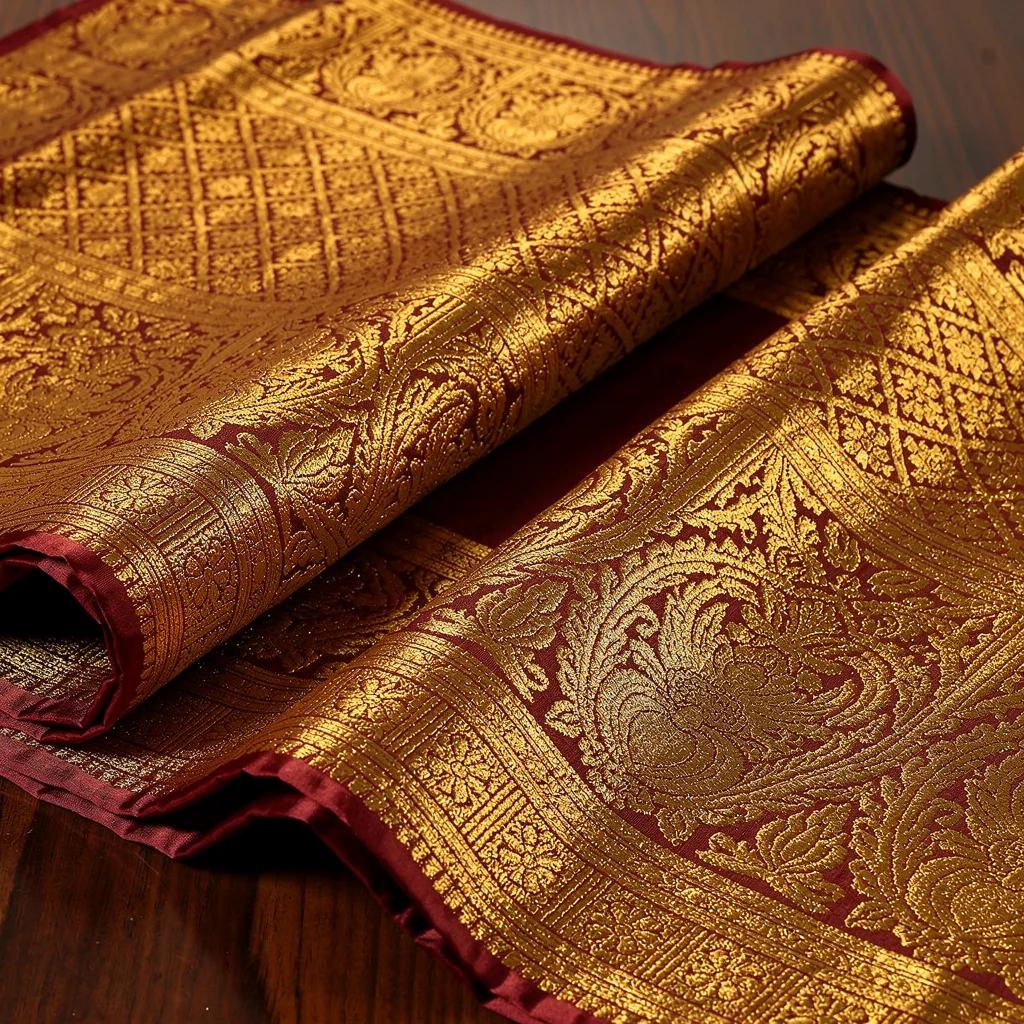
Banarasi Brocade
Woven on handlooms in the ancient city of Varanasi, Banarasi brocade is characterized by its gold and silver zari work, intricate motifs (jaal, butidar), and luxurious weight. Our Banarasi fabrics come from fourth-generation weaving families. Featured in the Virasat collection as the foundation of the Banarasi Sutra gown.
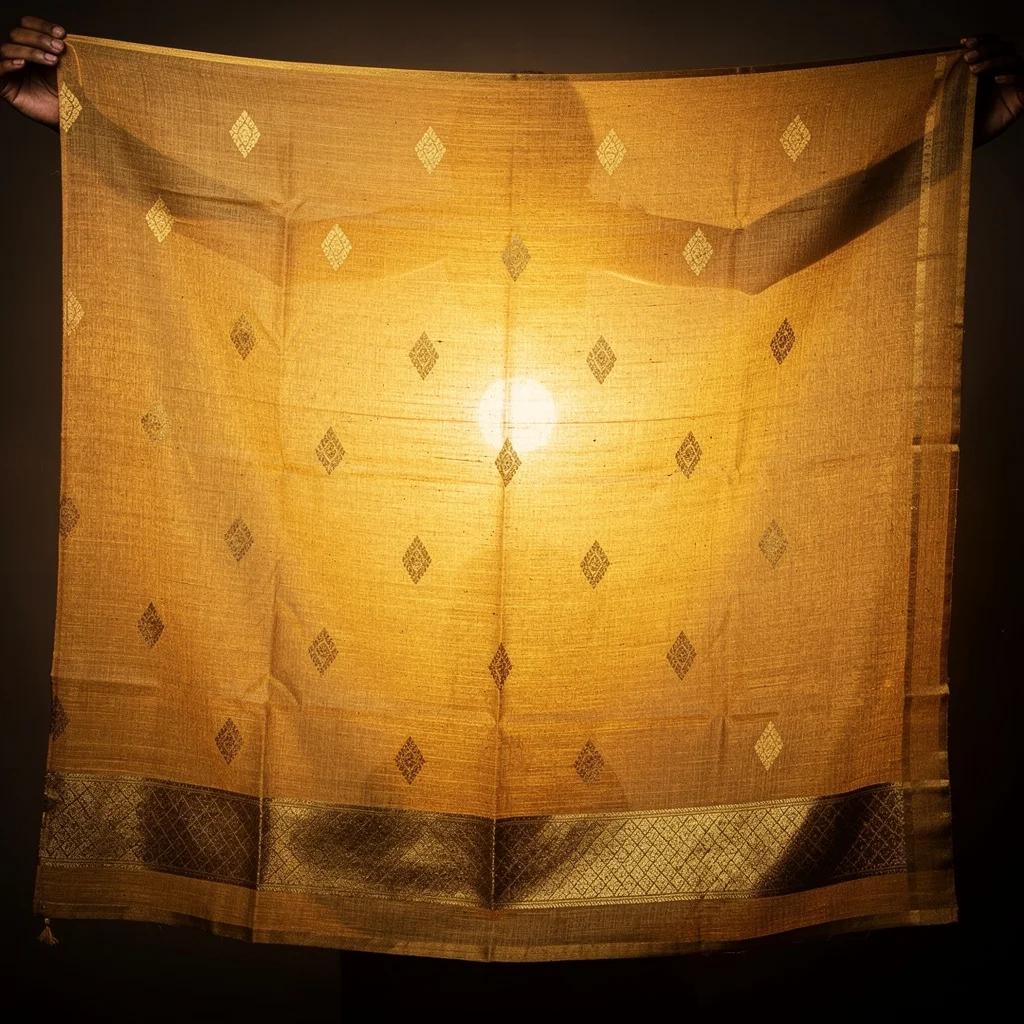
Chanderi Silk
A gossamer-weight fabric from Chanderi in Madhya Pradesh, known for its sheer texture, gold and silver zari borders, and traditional buti (small motif) patterns. Chanderi silk catches light like no other fabric — it appears to glow from within. Used in the Virasat collection for the Chanderi Leher gown.
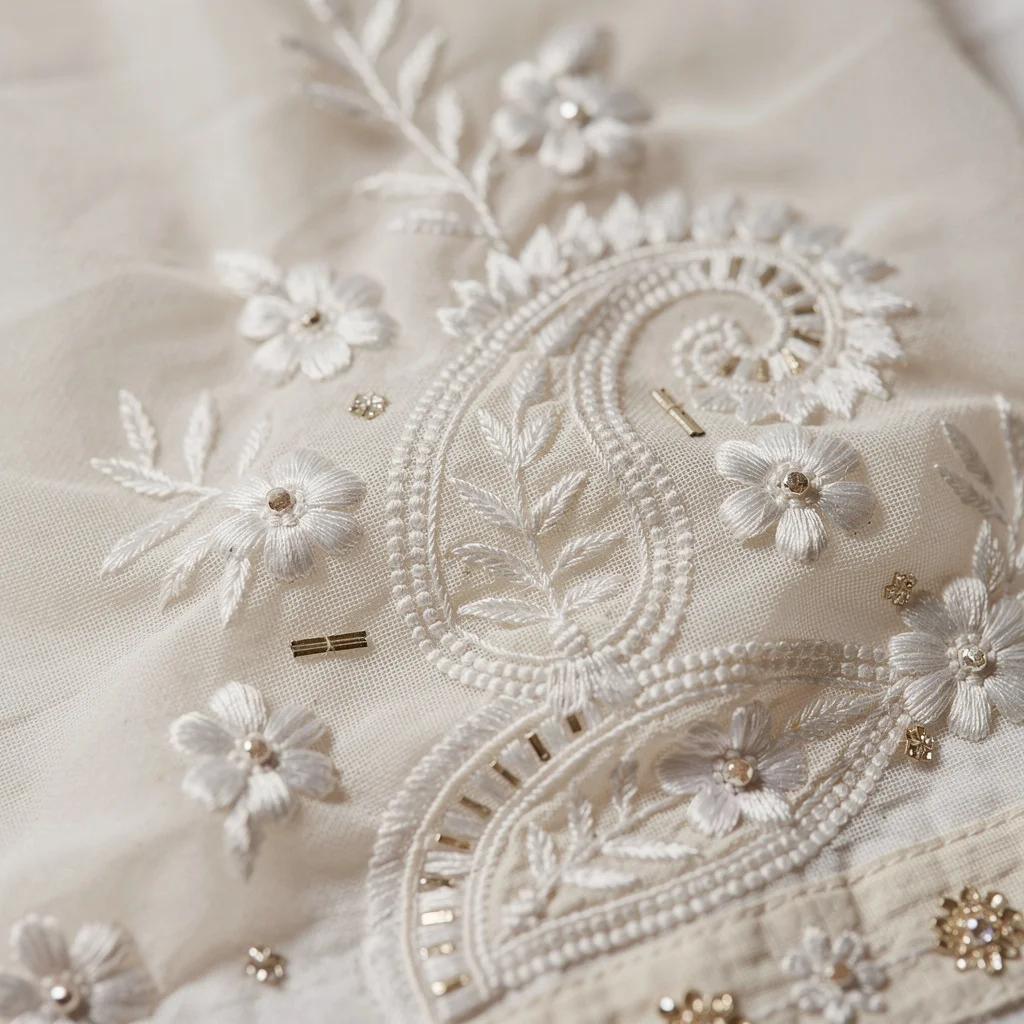
Chikankari
A delicate white-on-white hand embroidery from Lucknow, Chikankari uses 36 distinct stitches to create floral and paisley patterns that appear almost woven into the fabric. Our Chikankari is enhanced with mukaish (metallic strips) for subtle shimmer. Featured in Virasat's Chikankari Khawaab look.
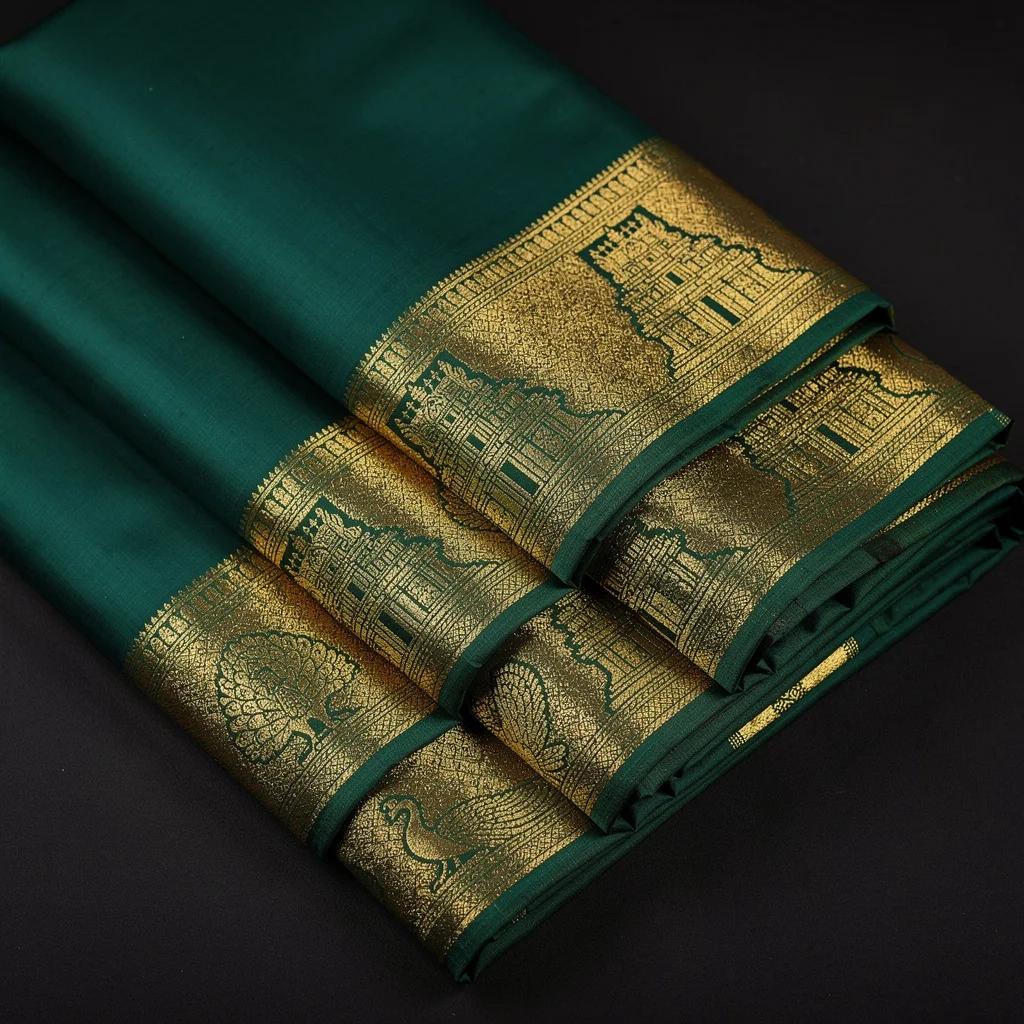
Kanjeevaram Silk
The heaviest and most lustrous of India's handloom silks, woven in Kanchipuram, Tamil Nadu. Characterized by contrasting body and border colors, temple-inspired motifs, and a distinctive three-shuttle weaving technique that creates a fabric with an almost architectural structure. Foundation of Virasat's Kanjivaram Sundari.
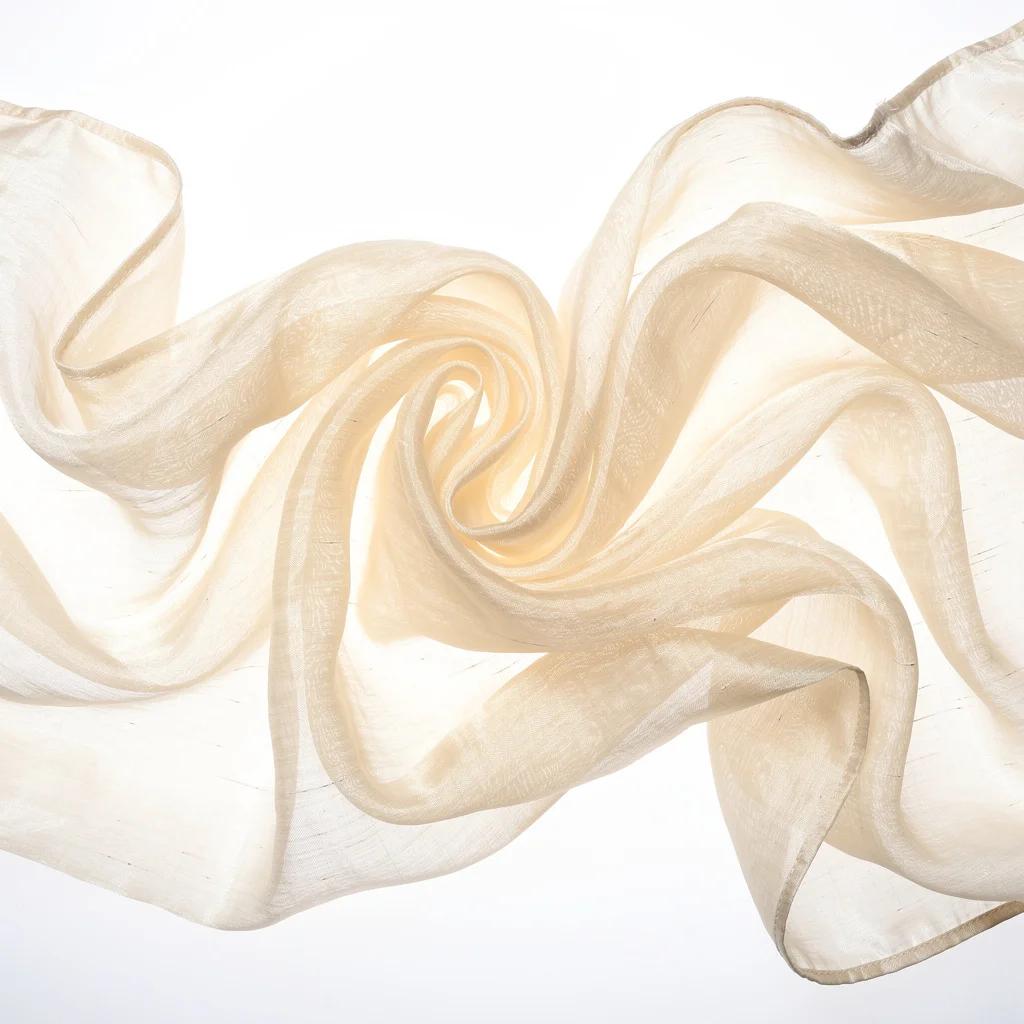
Raw Silk Organza
A crisp, lightweight fabric with a subtle natural sheen and just enough body to hold structure while remaining ethereally transparent. Our silk organza is sourced from Mysore silk farms and woven in Bangalore. The foundation fabric of the Noor bridal collection — it catches golden-hour light like liquid.
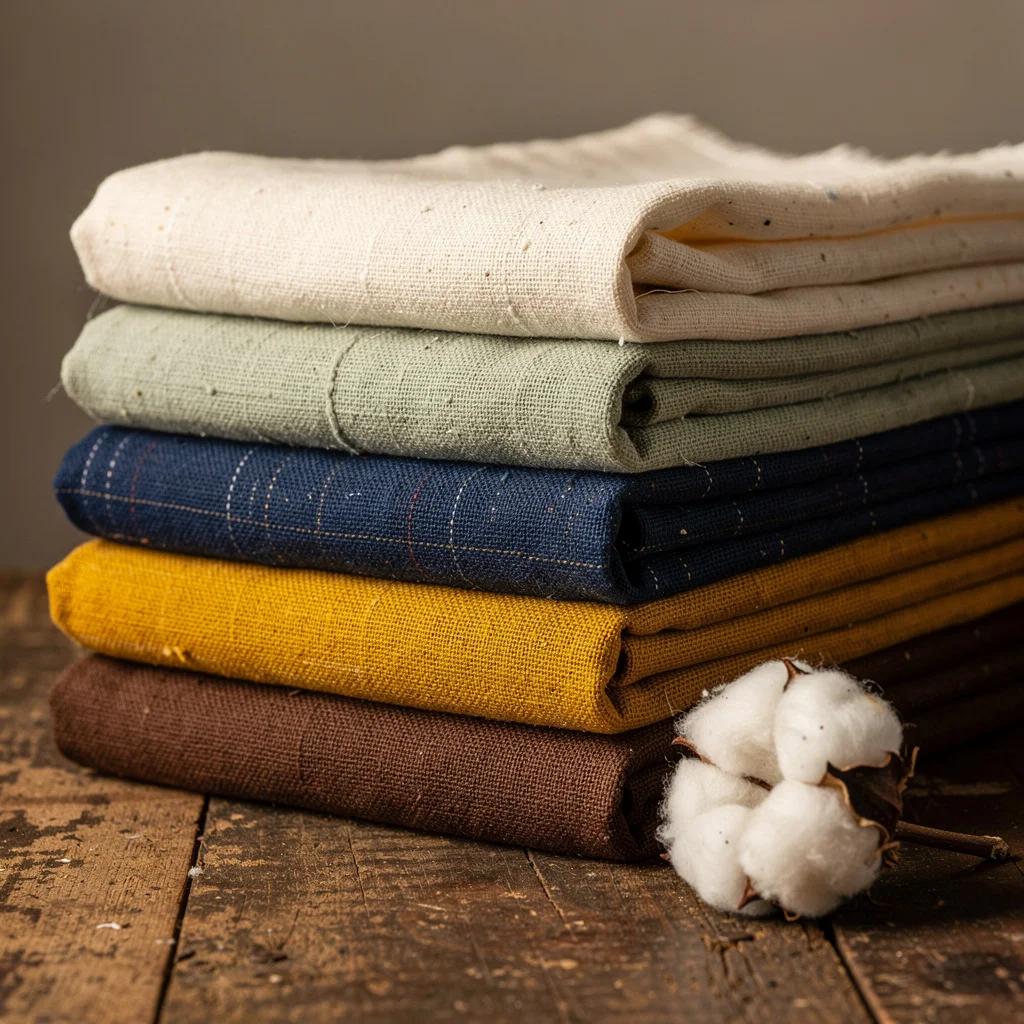
Khadi & Handloom Cotton
Khadi — handspun and handwoven cotton — is India's fabric of independence, both literally and aesthetically. We source our khadi from cooperative societies in Gujarat and handloom cotton from weavers in West Bengal. The irregularities of hand-spinning give each meter a unique character. Foundation of Dharaa and Kavya collections.
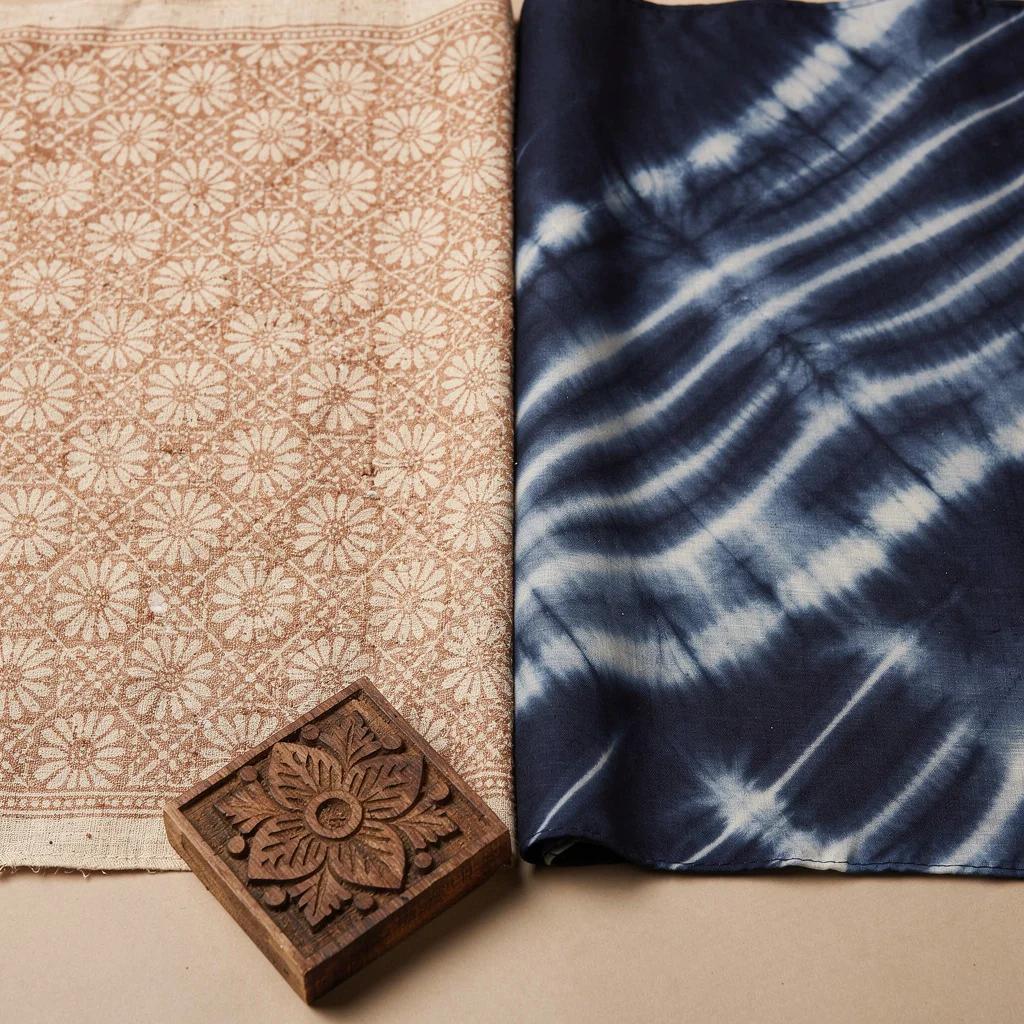
Block Print & Shibori
Two distinct textile techniques united by the principle of resist-dyeing. Our Sanganeri and Ajrakh block prints come from Jaipur, using hand-carved teak blocks and natural dyes. Our shibori is done in collaboration with artisans using traditional Japanese-Indian hybrid techniques. Featured throughout the Dharaa collection.